Professional servicing every 3-4 months is essential, but you don’t have to wait for a technician to keep your system efficient. We will show you 7 simple maintenance tasks any homeowner can do.
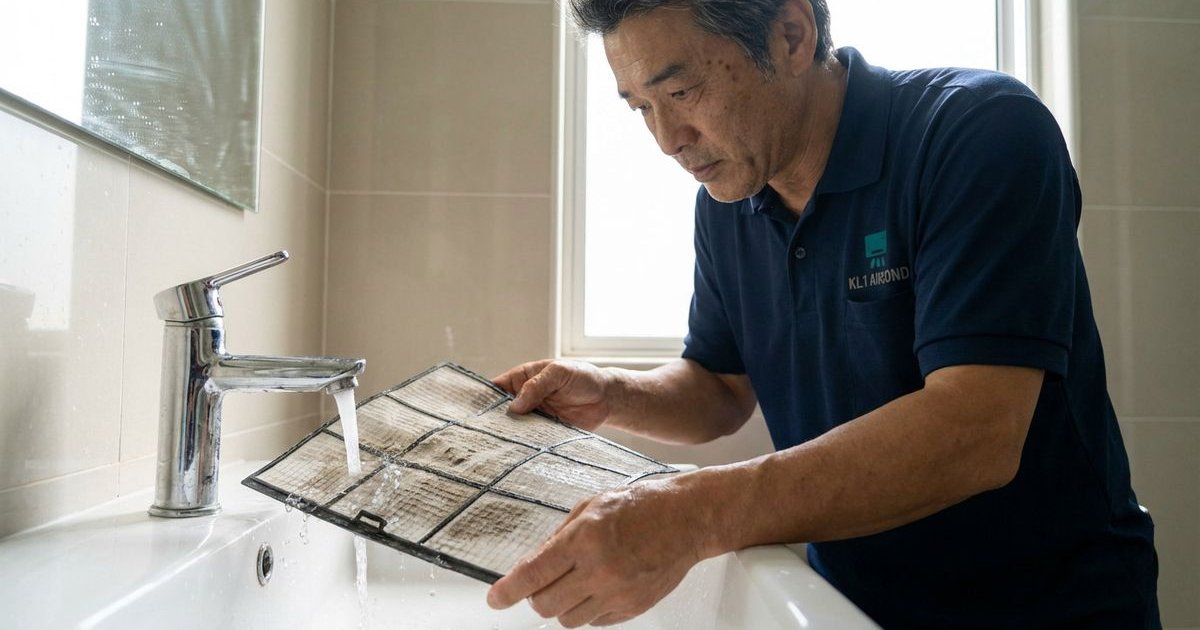
1. Clean or Replace Air Filters
Frequency: Every 30-90 days
Why it matters: The Department of Energy reports that replacing a dirty filter can lower your air conditioner’s energy consumption by 5% to 15%. Clogged filters restrict airflow, which forces your system to run longer and increases the risk of the evaporator coil freezing over.
How to do it:
- Turn off the thermostat and the AC unit.
- Locate the filter slot (usually on the return air duct or behind the front panel of a mini-split).
- Slide out the old filter.
- For disposable filters: Check the size printed on the frame (e.g., 20x20x1) and insert a new one with the arrows pointing toward the blower.
- For reusable filters: Rinse with warm water and let dry completely before reinstalling.
Pro tip: Pay attention to the MERV rating when buying replacements. For most homes, a MERV 8 to MERV 11 filter strikes the best balance between filtration and airflow. Brands like 3M Filtrete or Honeywell offer pleated options that trap more dust than cheaper fiberglass models without straining your blower motor.
2. Wipe the Indoor Unit Exterior
Frequency: Weekly
Why it matters: Dust that settles on the exterior plastic housing will eventually be pulled into the intake vents. Keeping the outside clean prevents this cycle and keeps the unit looking new.
How to do it:
- Turn off the power to the unit.
- Take a microfiber cloth (damp, not soaking wet) to trap dust without scratching the plastic.
- Wipe the top, front, and sides of the casing.
- Dry immediately with a fresh cloth to prevent water spots.
Avoid: Using harsh chemical cleaners or ammonia-based sprays. These can discolor the plastic housing over time or degrade the finish. Plain water or a mild dish soap solution is safer and just as effective.
3. Clean the Air Vents
Frequency: Every 2 weeks
Why it matters: Dusty supply and return vents are a breeding ground for mold spores. If you ignore them, your system pushes these particles into the air you breathe every time it cycles on.
How to do it:
- Turn the system off.
- Use a vacuum with a soft brush attachment to remove loose dust from the louvers.
- For sticky residue, use a damp cloth wrapped around a butter knife or paint stirrer to reach between the slats.
- Wipe the surrounding wall or ceiling area to catch stray dust.
4. Check and Clear the Outdoor Unit
Frequency: Monthly
Why it matters: Your outdoor condenser needs to “breathe” to release heat. If it is choked by weeds or debris, the compressor runs hotter and harder, shortening its life span.
How to do it:
- Remove leaves, twigs, and grass clippings from around the base.
- Maintain a strict 2-foot clearance zone (about 60cm) on all sides of the unit.
- Trim back shrubs or overhanging branches that encroach on this space.
- Rinse the unit gently with a garden hose from the top down to wash away pollen and dirt.
Avoid: Using a pressure washer. The high-velocity stream can crush the delicate aluminum fins on the condenser coil. If you see bent fins, you can use an inexpensive tool called a fin comb to straighten them carefully.
5. Test the Drainage
Frequency: Monthly
Why it matters: A clogged condensate line is the most common cause of water damage from AC units. In the US, water damage claims average over $2,500, making this a critical check.
How to do it:
- Locate your drain line outlet (usually a PVC pipe outside near the condenser).
- Watch for dripping water while the AC is running.
- If it is dry after 30 minutes of cooling, the line may be blocked.
- Find the access point on the indoor drain line (often a T-shaped pipe with a cap).
- Pour a cup of distilled white vinegar down the line to kill algae and bacteria.
Simple unclogging: Many technicians prefer vinegar over bleach. Bleach fumes can corrode the copper evaporator coils and damage the glue used in PVC piping.
Safety Note: Many modern US systems have a float switch that shuts the AC off automatically if the drain pan fills up. If your screen goes blank and the AC won’t turn on, check your drain line first.
6. Inspect for Unusual Signs
Frequency: Weekly (takes 30 seconds)
Why it matters: Catching a “small” noise today prevents a catastrophic compressor failure tomorrow.
Check for:
- ❌ Short Cycling: The unit turns on and off rapidly every few minutes.
- ❌ Dirty Sock Syndrome: A distinct moldy, musky smell when the air starts blowing.
- ❌ Ice: Frost on the coils or refrigerant lines (indicates a leak or airflow issue).
- ❌ Grinding Noises: Metal-on-metal sounds suggest a failing fan motor bearing.
- ❌ Weak Airflow: Indicates a failing blower or a completely blocked filter.
If you spot any of these specific symptoms, shut the system down and call a pro immediately.
7. Optimize Your Usage
Frequency: Always
Why it matters: Smart habits reduce the workload on your system. For every degree you raise your thermostat above 72°F, you can save roughly 3% on your cooling costs.
Tips:
- The Golden Number: The US Department of Energy recommends setting your thermostat to 78°F (26°C) when you are home.
- The Wind Chill Effect: Run ceiling fans while you are in the room. This allows you to set the AC 4 degrees higher while feeling just as cool.
- Upgrade Hardware: Install a smart thermostat like an Ecobee or Google Nest. These learn your schedule and automatically adjust temps when you leave, preventing waste.
- Close Blinds: Solar heat gain through windows accounts for a massive portion of your cooling load.
What NOT to DIY
Some tasks carry legal or safety risks and must be handled by a certified technician:
❌ Handling Refrigerant Under EPA Section 608, it is illegal for anyone without certification to knowingly vent refrigerant or handle refrigerant circuits. You cannot just “top it off.”
❌ Cleaning Evaporator Coils These are difficult to reach without disassembly. Using the wrong brush or chemical can puncture the copper lines, ruining the system.
❌ Electrical Capacitors The capacitor stores a high-voltage charge even when the power is off. Touching it can result in a severe shock.
❌ Ductwork Sealing Properly sealing ducts often requires accessing crawl spaces or attics and using mastic sealant, which is best left to pros with the right protective gear.
DIY Maintenance Schedule
| Task | Weekly | Bi-Weekly | Monthly | Quarterly |
|---|---|---|---|---|
| Wipe exterior | ✓ | |||
| Visual inspection | ✓ | |||
| Clean vents | ✓ | |||
| Check filter | ✓ | |||
| Flush drain line | ✓ | |||
| Clear outdoor unit | ✓ | |||
| Replace filter | ✓ |
Signs You Need Professional Service
Even with diligent care, parts eventually wear out. Call a professional if:
- You hear bubbling or hissing sounds (refrigerant leak).
- Your energy bills spike suddenly without a change in usage.
- The system has not had a tune-up in over 12 months.
- Air coming from the vents feels room temperature.
The 80/20 Rule
DIY maintenance handles the easy 20% of upkeep that prevents 80% of common failures. Professional servicing handles the technical calibration that ensures longevity.
The combo approach:
- DIY: Monthly filter changes and drain line flushing.
- Professional: An annual “tune-up” (usually in spring).
- Deep Clean: Chemical coil cleaning every 1-2 years depending on usage.
This strategy maximizes your investment. A well-maintained AC can last 15-20 years, while a neglected one often fails in 8-10.
Estimated Savings from DIY Maintenance
| Benefit | Annual Savings (Est.) |
|---|---|
| Prevent Emergency Repairs | $150 - $400 |
| Lower Electricity Bills | $100 - $250 |
| Extend Unit Lifespan | Priceless |
Spending 30 minutes a month on these tasks pays for itself. A standard professional tune-up costs between $75 and $200 in the US, but an emergency repair on a weekend can easily exceed $500.
Need professional servicing? We’re here to help with the tasks that require expertise.
Related Services: General Aircond Service | Chemical Wash | Aircond Repair
Need This Service?
Ready to put these tips into action? Our professional technicians are here to help.
View Our Services