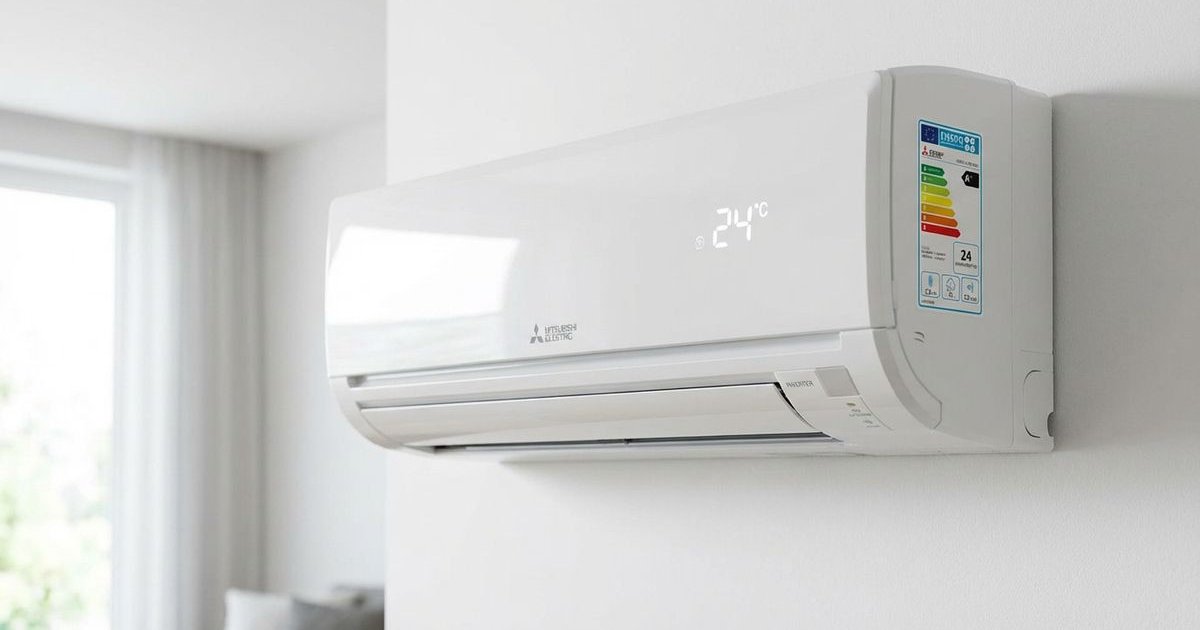
Inverter vs Non-Inverter Aircond: Which Should You Buy for Your Malaysian Home?
“Should I get an inverter or non-inverter?”
This is the single most common question we get from Malaysian homeowners. With TNB electricity tariffs facing new adjustments in 2025, the answer affects more than just your comfort—it directly impacts your monthly budget.
A wrong choice here could mean sweating in the heat or paying hundreds of Ringgit extra in bills every year.
Here is the definitive guide to help you decide, backed by real numbers.
The Simple Difference
Non-Inverter: Think of this like a standard light switch. It is either 100% ON or 100% OFF. The compressor runs at full speed until the room is cold, then cuts off completely. When the room warms up, it blasts back on at full power.
Inverter: Think of this like a dimmer switch. It adjusts its power level based on exactly what the room needs. Once the room is cool, it slows down to a “cruise control” mode to maintain the temperature without stopping.
How They Work
Non-Inverter (Fixed Speed)
- The unit turns on at full blast (maximum electricity usage).
- It cools the room to your set temperature (e.g., 24°C).
- The compressor shuts off completely.
- The room warms up by 1-2 degrees.
- The compressor kicks back in at full power.
- This cycle repeats all night.
The result: This constant “start-stop” pattern causes massive energy spikes, similar to the fuel wasted in stop-and-go KL traffic.
Inverter (Variable Speed)
- It starts at full power to cool the room quickly.
- Once it reaches 24°C, it does not stop.
- Instead, the compressor slows down to a low-power mode.
- It uses just enough energy to keep the temperature steady.
- The motor practically never stops running, but it runs very gently.
The result: By avoiding energy-hungry startups, you save significant amounts of electricity.
Side-by-Side Comparison
We have updated these figures to reflect current 2025 market prices in Malaysia.
| Feature | Non-Inverter | Inverter |
|---|---|---|
| Initial Cost (1.0HP) | RM 800 - RM 1,300 | RM 1,400 - RM 2,200+ |
| Electricity Bill | Higher (Wasteful cycling) | 30-50% Lower |
| Cooling Speed | Slower startup | 20-30% Faster (Powerful mode) |
| Temperature | Fluctuates +/- 2°C | Precise & Constant |
| Noise Level | Louder (Compressor kicks) | Quiet (Steady hum) |
| Repair Costs | Cheaper & Easier | Higher (Complex PCB board) |
| Lifespan | 8-12 Years | 12-15+ Years |
Energy Savings: The Real TNB Numbers
Many buyers worry about the higher upfront price of an inverter.
Let’s calculate if it is worth it using the TNB Domestic Tariff (Tier 5 rate of RM 0.571/kWh), which applies to high-usage households.
The Scenario:
- Unit: 1.5 HP Air Conditioner
- Usage: 8 hours per night (Every night)
- Tariff: RM 0.571 per kWh
| Type | Est. Daily Usage | Est. Monthly Cost |
|---|---|---|
| Non-Inverter | 10 - 12 kWh | RM 170 - RM 205 |
| Inverter | 6 - 8 kWh | RM 100 - RM 135 |
| Monthly Savings | ~RM 70 - RM 100 |
The Verdict: You could save roughly RM 840 to RM 1,200 per year by choosing an inverter model.
The “Break-Even” Calculation
Is the extra upfront cost worth it?
- Price Difference: An inverter typically costs RM 500 - RM 700 more than a non-inverter.
- Monthly Savings: ~RM 70.
- Time to Break Even: 7 to 10 months.
After less than a year of use, the inverter has paid for its own upgrade cost. Every month after that puts money back in your pocket.
When Inverter Makes Sense
✅ Buy Inverter If:
- You use it every night: If the AC runs for more than 4 hours daily, the electricity savings are massive.
- It is for a bedroom: Inverters are much quieter. They eliminate the loud “clunk” sound of the compressor turning on and off, which often wakes light sleepers.
- You plan to stay long-term: If you own the home or plan to rent for 2+ years, you will reap the financial rewards.
- You hate being too cold: Non-inverters often overshoot the temperature, making you freeze before shutting off. Inverters keep it perfectly stable.
❌ Buy Non-Inverter If:
- Guest Room Usage: If the room is only used once a month for visitors, you will never recoup the extra upfront cost.
- Rental Properties: If you are a landlord and you do not pay the electricity bill, a cheaper non-inverter saves you money upfront.
- Kitchens or Open Areas: In places with high heat sources or open doors (like a kopitiam setting), an inverter struggles to enter “power saving mode” and may run at full speed anyway.
Critical Maintenance Warning: The “Lizard” Factor
There is one specific downside to inverters that many salesmen in Malaysia won’t tell you.
The PCB Board Risk: Inverter units rely on a complex mainboard (PCB) to control the speed. This component is sensitive.
- Power Surges: Malaysia’s lightning storms can damage these boards.
- Pests: House lizards (cicak) love the warmth of the outdoor unit. If a lizard touches the live circuit on the PCB, it can short-circuit the board.
The Cost: Replacing a non-inverter capacitor costs RM 150. Replacing an inverter PCB board costs RM 350 - RM 800.
Pro Tip: When installing an inverter, ask your technician if they can apply a silicone coating or specific mesh guard to the outdoor unit to “lizard-proof” the PCB box.
Which Brands Should You Choose?
Based on local technician feedback and spare part availability in Malaysia:
| Brand | Series Recommendation | Why It’s Good |
|---|---|---|
| Daikin | FTKF / FTKU Series | Excellent “Smart Control” app and robust cooling. Parts are everywhere. |
| Panasonic | X-Deluxe / AERO Series | Features nanoe™ X technology which helps purify air. Very energy efficient (5-Star). |
| Acson | Avory Series | A “local hero” brand (part of Daikin group). slightly cheaper with great local support. |
| Mitsubishi | Electric (Mr. Slim) | Legendary durability and ultra-quiet operation. Expensive but lasts forever. |
Common Misconceptions
“Inverter saves electricity even if I set it to 18°C.” False. If you set the temperature to 16°C or 18°C, the unit forces itself to run at maximum power constantly to try and reach that impossible target. You will see zero savings. To save money with an inverter, set it between 23°C and 25°C.
“Inverters cool the room slower.” False. Modern inverters actually have a “Powerful” or “Jet” mode that runs the compressor at 110-120% speed for 20 minutes. This cools the room faster than a non-inverter.
“You cannot wash inverters with chemicals.” False. You absolutely can and should. However, the technician must be more careful not to splash water on the sensitive PCB electronics. Always hire a reputable service provider.
Our Recommendation
For 90% of Malaysian households, the Inverter is the smarter choice.
The electricity savings are real and significant. With the new 2025 tariff structures, a non-inverter unit is essentially a “cash leak” in your monthly budget.
The Golden Rule:
- For your Master Bedroom: Get a 5-Star Inverter.
- For the Living Room: Get a 4 or 5-Star Inverter.
- For the Guest Room: Get a Non-Inverter.
Need help choosing the right horsepower for your room size? WhatsApp us for personalized advice and installation quotes.
Related Service: Ready to buy? Our aircond installation service covers all brands with professional setup and warranty.
Need This Service?
Ready to put these tips into action? Our professional technicians are here to help.
Learn More About Our Service