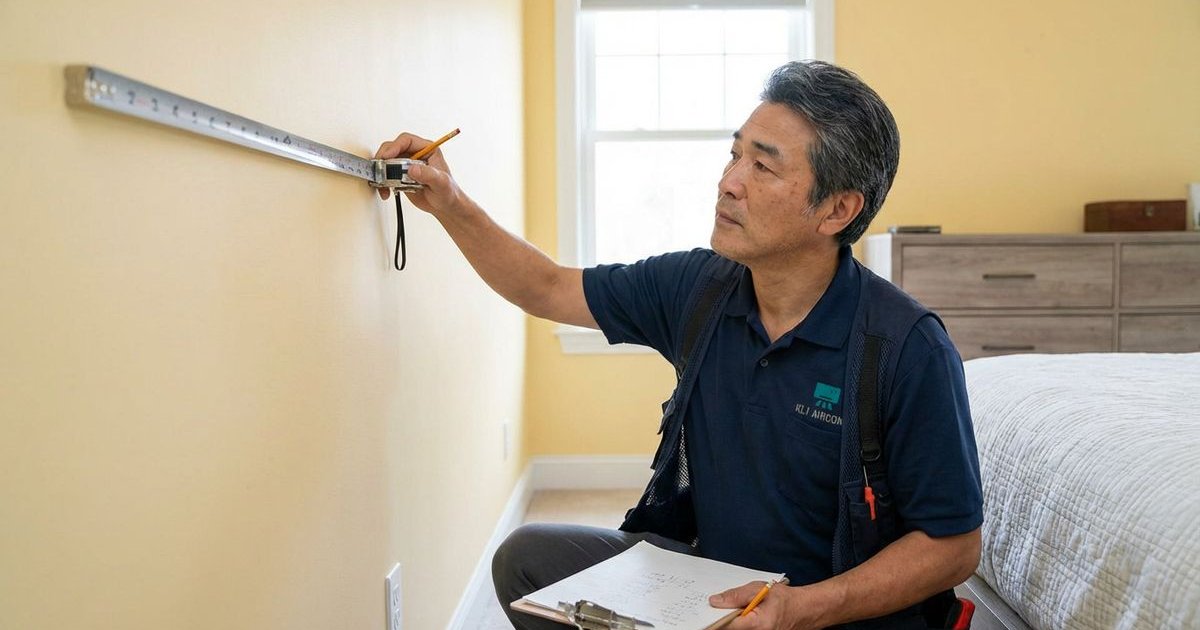
Choosing the wrong air conditioner size is the fastest way to inflate your Tenaga Nasional Berhad (TNB) bill. A unit that is too small will run continuously without cooling the room, while an oversized unit will short-cycle, leading to humidity issues and wasted energy.
The secret to lower bills isn’t just buying an energy-efficient brand; it’s matching the horsepower (HP) to your specific room conditions to avoid jumping into a higher electricity tariff tier. This guide breaks down exactly how to calculate the right size for Malaysian homes and turn these technical numbers into long-term savings.
The Basics: What is HP vs BTU?
Most Malaysians shop by Horsepower (HP), but the more accurate measurement is BTU (British Thermal Units).
- HP (Horsepower): A general category (e.g., 1.0 HP, 1.5 HP).
- BTU/hr: The actual cooling output.
Why this matters: Two different “1.0 HP” airconds can have different cooling power. A basic 1.0 HP model might offer 9,000 BTU, while a premium model pushes 9,600 BTU. Always check the specific BTU rating on the specification sheet before buying.
In Malaysia, standard residential units typically range from:
- 1.0 HP: ~9,000 - 9,500 BTU
- 1.5 HP: ~12,000 - 12,500 BTU
- 2.0 HP: ~18,000 BTU
- 2.5 HP: ~22,000 - 24,000 BTU
Quick Sizing Guide for Malaysian Homes
This table matches room size to the recommended HP, assuming a standard 10-foot ceiling.
| Room Size (sq ft) | Recommended HP | Ideal BTU Range |
|---|---|---|
| Up to 120 | 1.0 HP | 9,000 - 9,500 |
| 120 - 180 | 1.5 HP | 12,000 - 13,000 |
| 180 - 250 | 2.0 HP | 18,000 - 19,000 |
| 250 - 350 | 2.5 HP | 22,000 - 24,000 |
| 350 - 450 | 3.0 HP | 27,000 - 30,000 |
Calculating Your Room Size
To get the right fit, you need your room’s square footage.
Formula: Length (ft) × Width (ft) = Area (sq ft)
- Example: A standard master bedroom in a terrace house often measures 12 ft × 15 ft.
- Calculation: 12 × 15 = 180 sq ft.
- Result: This sits right on the border. For Malaysian weather, you should opt for 1.5 HP rather than risking a 1.0 HP unit.
If you don’t have a measuring tape, use the “heel-to-toe” method. Walk the length of the room placing one foot directly in front of the other; the average adult footstep is roughly one foot long.
Factors That Increase HP Requirement
Malaysia’s tropical climate means “standard” sizing often fails. You must add 10-20% extra cooling capacity if any of these factors apply to your room.
1. West-Facing Windows
The afternoon sun in Malaysia is intense. If your room faces west, the heat stored in your walls can raise the indoor temperature significantly between 4 PM and 7 PM. You will almost certainly need to step up one size (e.g., from 1.0 HP to 1.5 HP) to combat this heat load.
2. Top Floor & Roof Heat
For those living in landed properties or top-floor apartments, heat radiates down from the roof. Without high-quality roof insulation, your aircond battles both the ambient air and the ceiling heat. A 2.0 HP unit is often safer for a master bedroom in this situation.
3. Glass Walls and Sliding Doors
Modern condos often feature floor-to-ceiling glass. Glass is a poor insulator compared to brick.
- The Impact: A 150 sq ft room with a full glass wall heats up faster than a 200 sq ft room with small windows.
- The Fix: Install blackout curtains or high-quality tinting, or increase your HP.
4. Kitchen Proximity
Open-plan layouts are common in terrace homes. If your living room connects to the kitchen without a partition, heat from cooking travels instantly. You are cooling two spaces, not one.
5. Occupancy and Electronics
- People: Each person radiates about 100 watts of heat. A crowded office or family room needs more power.
- Tech: Gaming PCs, large TVs, and servers act as heaters. For a small 100 sq ft home office with a powerful PC, a 1.0 HP is the minimum; do not try to use a portable air cooler.
Room-Specific Recommendations
Small Bedroom / Study (80-120 sq ft)
- Best Choice: 1.0 HP.
- Pro Tip: Look for “Quiet Mode” features (like Daikin’s Quiet operation) if this is a nursery or study.
Master Bedroom (150-200 sq ft)
- Best Choice: 1.5 HP to 2.0 HP.
- Reason: This accounts for the attached bathroom and wardrobe area, which steal cool air.
- Feature to Look For: Air purification is valuable here. Panasonic’s Nanoe-X technology is popular in Malaysia for reducing allergens and odours while you sleep.
Living Room (250-400 sq ft)
- Best Choice: 2.0 HP to 2.5 HP.
- Reason: Living rooms have high foot traffic and door openings.
- Alternative: Two smaller units (e.g., two 1.5 HP units) often provide better air distribution than one massive 3.0 HP unit, preventing hot spots in L-shaped rooms.
Inverter vs Non-Inverter: The Cost Reality
The choice between inverter and non-inverter technology directly affects your monthly budget.
Non-Inverter Units:
- How they work: The compressor runs at 100% speed until the room is cold, then shuts off. When the room warms up, it blasts at 100% again.
- Best for: Rooms you use rarely (guest rooms).
- Cost Impact: Cheaper upfront (save ~RM300-400), but higher running costs.
Inverter Units:
- How they work: The compressor slows down to maintain the temperature rather than stopping.
- Best for: Bedrooms and living rooms used daily (8+ hours).
- Cost Impact: While more expensive to buy, they can save 30-50% on electricity over a year.
The Tariff Danger: TNB’s domestic tariff is tiered. Usage above 300kWh costs 51.60 sen/kWh, compared to 21.80 sen/kWh for the first 200 units. An inefficient non-inverter aircond can easily push your total household usage into the expensive 51.60 sen tier, doubling your cooling cost.
Common Mistakes to Avoid
Mistake 1: Undersizing to Save Money
Buying a 1.0 HP unit for a 1.5 HP room saves ~RM200 upfront but costs you more in the long run. The compressor will never turn off, leading to a higher bill and a lifespan of only 3-4 years instead of the usual 7-10 years.
Mistake 2: Ignoring Installation Quality
A great aircond with poor installation is useless.
- The Issue: Using thin copper piping (0.61mm) instead of the standard 0.71mm or 0.81mm can lead to gas leaks.
- The Fix: Always confirm the piping thickness with your installer. Standard installation for a 1.0 HP unit in Malaysia ranges from RM250 to RM350 depending on pipe length.
Mistake 3: Oversizing “Just in Case”
A 2.5 HP unit in a small room will cool the air too fast, shutting off before it has removed the humidity. You end up with a room that feels cold but “sticky” or clammy.
Real-World Scenarios
Scenario A: The Condo Bedroom
- Room: 10 × 12 ft (120 sq ft).
- Condition: Middle floor, no direct sun.
- Verdict: 1.0 HP is perfect.
Scenario B: The Hot Master Bedroom
- Room: 14 × 16 ft (224 sq ft).
- Condition: Facing West, lots of glass.
- Verdict: 2.0 HP. A 1.5 HP unit would struggle to reach 24°C on a hot afternoon.
Scenario C: The Open Living Area
- Area: 20 × 20 ft (400 sq ft).
- Condition: Connected to dining area.
- Verdict: 2.5 HP or two 1.5 HP units. Using two units allows you to run only one when you are watching TV alone, saving electricity.
Professional Assessment
While calculations provide a baseline, a professional site visit is the only way to guarantee performance. Experienced technicians consider:
- Insulation quality of your specific building.
- Exact window orientation.
- Existing piping infrastructure (especially for concealed piping in condos).
Summary: Your Buying Checklist
- Measure First: Calculate square footage (Length × Width).
- Check the BTU: Don’t just look at HP; ensure the BTU matches your room size.
- Factor in Heat: Add size for west-facing windows or top floors.
- Think Long Term: Choose Inverter models for bedrooms to keep your TNB bill in the lower tiers.
- Verify Installation: Ask for 0.71mm copper piping or thicker.
Need Help?
Not sure about the right size for your room? WhatsApp us your room dimensions and photos - we’ll recommend the perfect unit at no charge.
Related Service: Ready to install? Check out our professional aircond installation service with free site assessment and quality workmanship guarantee.
Need This Service?
Ready to put these tips into action? Our professional technicians are here to help.
Learn More About Our Service